Certification of Our Cassava Fields: A Promising Start
In 2024, the Hubi & Vinciane Foundation took an important step forward by distributing 50,000 certified cassava cuttings in the Borgou region. Twelve farmers – two per village – began working with this planting material. Beforehand, they had completed thorough training in good agricultural practices. The goal? To multiply high-quality cassava cuttings, sell them, and create a new source of income.
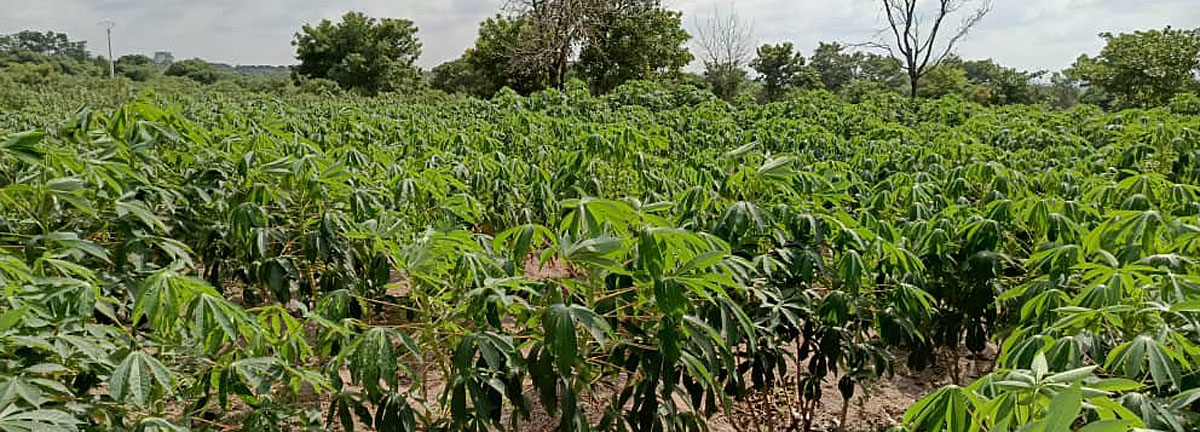
Cassava is a real asset. It’s a sustainable, resilient crop that improves soil fertility, reduces the need for chemical inputs, strengthens food security, and protects the environment.
And the hard work is paying off. In 2025, all twelve farmers produced their own cuttings for the very first time. Meanwhile, the Plant Production Directorate of the Ministry of Agriculture, Livestock and Fisheries, together with INRAB (the National Institute of Agricultural Research in Benin), inspected the fields. Their conclusion was clear: more than 80% of the cassava fields received certification—an especially strong result for a first year.
“I’m proud that my field was certified,” says one of the farmers. “By selling the cuttings, I can finally generate extra income to support my family.”
Not every plot was approved. In some areas, roaming animals had damaged the crops by eating and breaking leaves and stems. One key lesson for next year: protecting the fields more effectively will be essential.
Our agricultural experts are also enthusiastic.
“The farmers’ motivation is contagious,” they say. “They can see for themselves that agroecological techniques really deliver results.”
With this encouraging start, the Hubi & Vinciane Foundation now aims to expand the agroecological approach to many more farmers. Together, we’re building a sustainable future with greater opportunities and resilience for local communities.
Le manioc est en effet un atout majeur. C’est une culture durable et résiliente qui améliore la fertilité des sols, réduit l’utilisation de produits chimiques, renforce la sécurité alimentaire et protège l’environnement.
Le travail porte ses fruits. En 2025, les douze agriculteurs ont produit pour la première fois leurs propres boutures. Entre-temps, la Direction de la Production Végétale du Ministère de l’Agriculture, de l’Élevage et de la Pêche ainsi que l’INRAB (Institut National de Recherche Agricole du Bénin) sont venus inspecter les champs. Leur verdict est clair : plus de 80 % des champs de manioc ont obtenu la certification – un résultat particulièrement encourageant pour une première année.
« Je suis fier que mon champ ait été certifié, » raconte un des producteurs. « Grâce à la vente des boutures, je peux enfin générer des revenus supplémentaires pour soutenir ma famille. »
Tous les champs n’ont pas été approuvés. Par endroits, des animaux errants ont causé des dégâts en mangeant et abîmant feuilles et les tiges. Une leçon importante pour l’année prochaine : il faudra mieux protéger les parcelles.
Nos agronomes qui étaient responsables de la formation partagent aussi leur satisfaction.
« L’enthousiasme des producteurs est communicatif, » expliquent-ils. « Ils voient de leurs propres yeux que les techniques agroécologiques donnent vraiment des résultats. »
Avec ce début prometteur, la Fondation Hubi & Vinciane souhaite étendre l’approche agroécologique à un plus grand nombre d’agriculteurs. Ensemble, nous construisons un avenir durable, avec plus d’opportunités et de résilience pour les communautés locales.